
Three hundred days of sunshine is the line every Arizona brochure leads with. It's also, from a paint perspective, the most destructive thing about living here — and unlike dust or road grime, there is no washing it off.
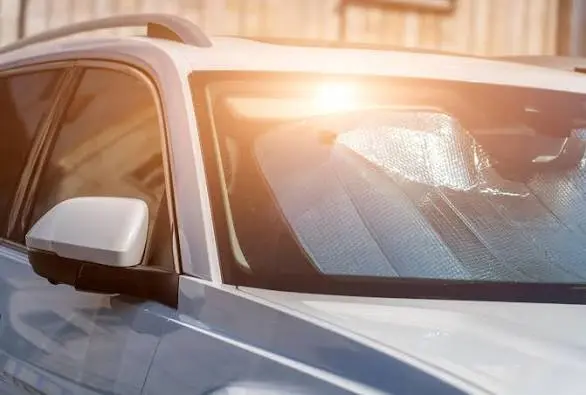
Sun damage is the form of paint failure with a point of no return. Swirls can be polished out. Water spots can be removed. But once clear coat has broken down far enough to actually fail, the only fix is a repaint of that panel. That's why catching it early matters more than any other topic in Arizona car care.
What clear coat is actually doing up there
Modern automotive paint is layered: primer, then the color basecoat, then a transparent clear coat on top. The clear coat carries the gloss, and it carries UV inhibitors — sacrificial compounds engineered to absorb ultraviolet radiation so it doesn't reach the color layer underneath.
Those inhibitors are consumable. Every hour in direct sun spends some of them. In a mild climate that budget stretches over many years. In the Valley, where the UV index routinely runs extreme through the summer and surface temperatures on a dark hood can climb well past air temperature, the same budget gets spent dramatically faster.
How the failure actually progresses
Stage one: loss of depth
The first sign isn't a defect you can point to, it's an absence. The paint stops looking wet. Reflections go slightly soft. Most owners never register this stage, because it happens gradually enough that the car simply looks normal to them.
Stage two: oxidation
With the inhibitors depleted, UV starts attacking the resin itself. The surface microtextures, taking on a chalky, faintly rough character. On red and dark-blue vehicles this is when color shift becomes obvious. Run a clean hand over an oxidized hood and it feels dry rather than slick.
Stage three: clear coat failure
The layer delaminates and peels away in patches, usually starting on horizontal surfaces — roof, hood, trunk lid, the tops of mirrors — because those take the most direct exposure. The edges look cloudy and white. This is terminal. No polish, no coating, and no product sold in a bottle repairs it. The panel gets repainted or it stays that way.
Stages one and two are recoverable. Stage three is not. Everything worth doing happens before you reach it.
Why Arizona accelerates every stage
- UV intensity. Low latitude and very little cloud cover mean more ultraviolet energy reaching the surface than in most of the country, for more days of the year.
- Thermal cycling. Panels heat enormously during the day and cool sharply overnight. That repeated expansion and contraction stresses the paint film and works against adhesion.
- Abrasive load. Monsoon dust scratches the surface, and a scratched surface presents more edge and more area for UV to work on.
- Hard water. Mineral-heavy water left to dry in direct sun etches spots into the clear coat, creating more weak points.
These compound. A car that's being scratched, etched, and thermally cycled loses its UV protection faster than the same car in a gentler climate.
What actually slows it down
Shade, whenever it's available
Unglamorous and enormously effective. A garage, a carport, or even consistently choosing the shaded end of the lot meaningfully extends clear coat life. Nothing you can buy outperforms simply not being in the sun.
A sacrificial layer above the clear coat
This is what protection products are for. A wax or sealant adds a thin barrier that takes some of the UV hit instead of the clear coat — but in Arizona heat, traditional carnauba softens and sheds quickly. A ceramic coating bonds to the surface and holds up under desert conditions far longer, which is why coatings make more sense here than almost anywhere else in the country. We compared the two directly in ceramic coating versus wax in Arizona heat.
Keeping the surface clean
Contaminants left on paint — bird droppings, bug residue, hard-water spots, industrial fallout — react faster under heat and UV. Removing them promptly prevents localized damage from becoming permanent etching.
Correcting before protecting
A coating applied over oxidized, swirled paint locks in the current condition. If the finish has already lost its depth, paint correction restores it first, and then the coating protects something worth protecting.
The honest timeline
A garage-kept Valley car with consistent care and a quality coating can hold excellent paint for many years. The same car parked outside, washed occasionally, and never protected can show visible oxidation surprisingly early — and we've seen genuine clear coat failure on vehicles far younger than their owners expected.
The difference isn't the car. It's whether anything stood between the paint and the sun.
Not sure which stage your paint is in?
We'll come to you, inspect the finish in person, and tell you straight whether it needs correction, protection, or just consistent maintenance.
Book Online